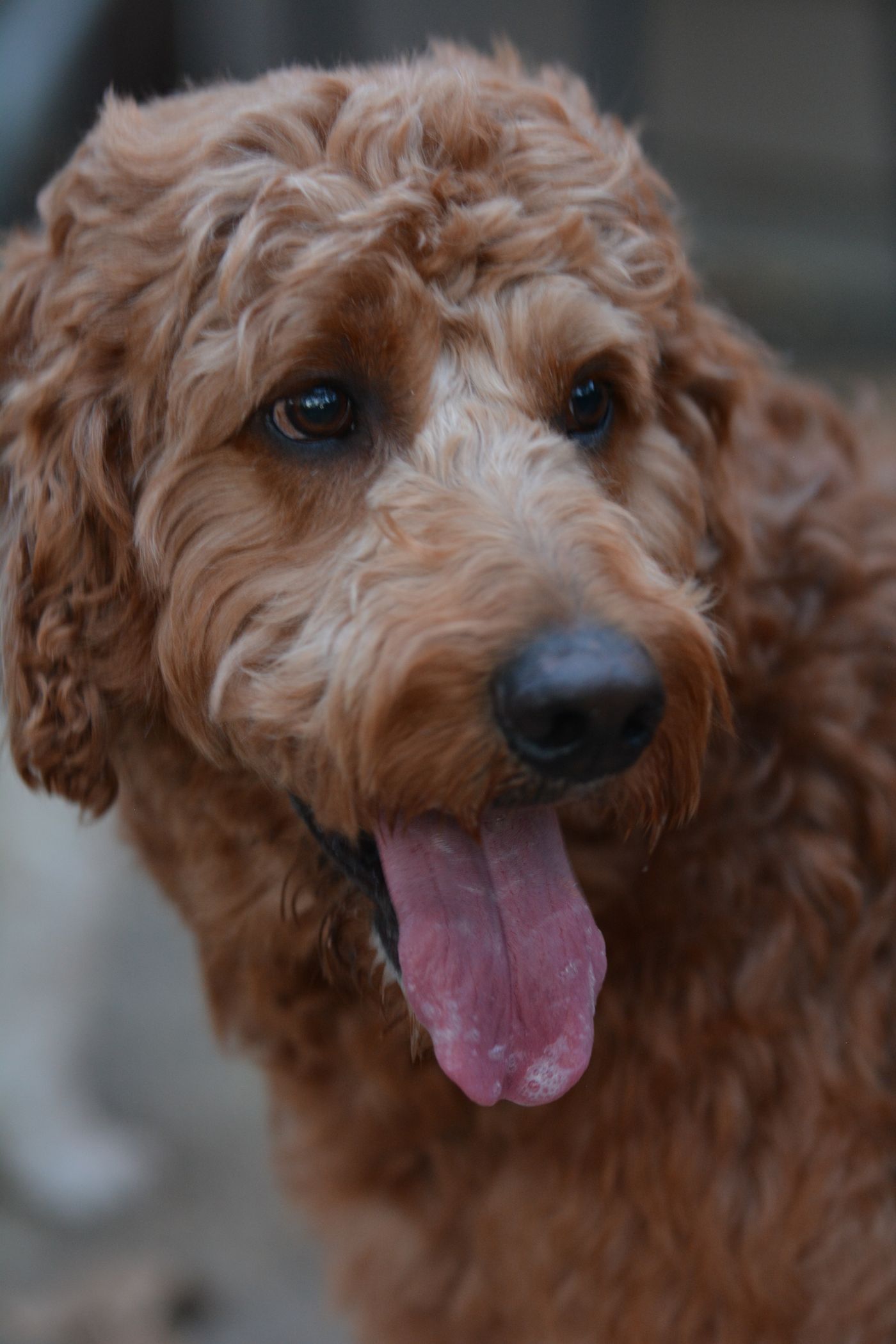
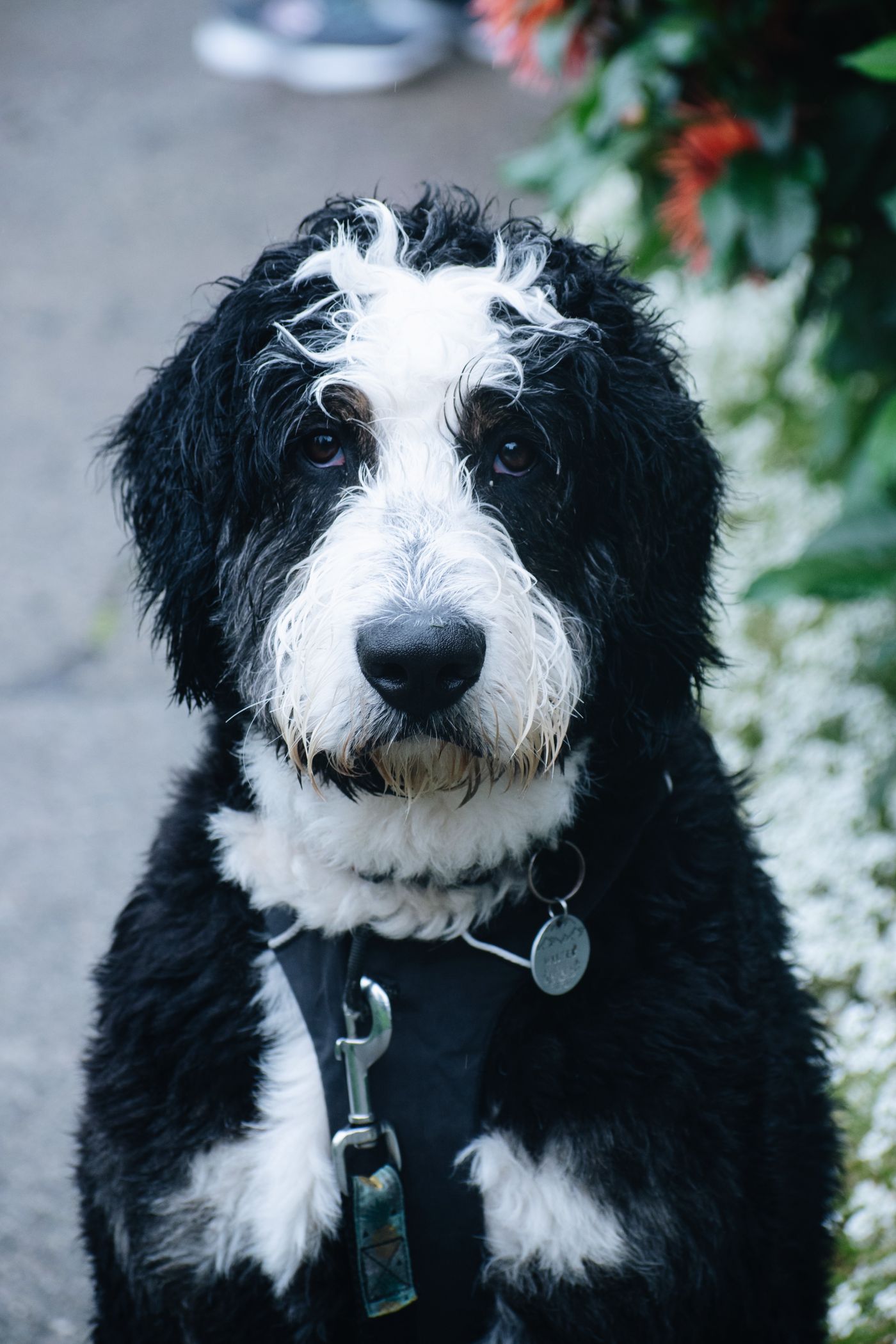
Short answer: if minimizing shed hair and dander is your single biggest priority, lean Goldendoodle, especially an F1B or multigenerational one. If you want a calmer, goofier temperament and don't mind a coat that sheds a little more, the Bernedoodle is a genuinely good, honest choice too. Longer answer: these two breeds get compared constantly because they're both Poodle crosses marketed toward allergy-conscious families, but the real differences show up in coat mechanics and temperament, not in some vague "better breed" verdict. Here is the honest side by side.
Our take
The short version
Goldendoodles usually have the edge for allergy-sensitive households, because the Golden Retriever side doesn't add a double coat the way the Bernese Mountain Dog does. At the same coat generation, an F1B Goldendoodle tends to shed less than an F1B Bernedoodle, and breeders of both breeds recommend F1B or multigenerational litters over F1 when allergies are a real concern. Bernedoodles usually have the edge on sheer temperament calm: they're widely described as goofy and easygoing rather than the more classically eager-to-please Goldendoodle, and their size range stretches further down into true tiny territory (as small as 10 to 24 pounds) than most Goldendoodle lines offer. Both breeds land in the same 50-to-90-pound standard range, both average roughly 10 to 15 years, and neither is allergy-free. If shedding is your top filter, lean Goldendoodle. If temperament and size flexibility matter more, the Bernedoodle is not a consolation prize, it's a real contender.
Coat, allergens, size, and temperament, together
Twelve points that actually matter when you're choosing between the two, on the axes that drive allergy fit: coat type, allergen mechanism, shedding, and size and temperament fit.
Swipe sideways on a phone to see the Bernedoodle column.
| What matters | Goldendoodle | Bernedoodle |
|---|
| Parent breeds | Golden Retriever x Poodle | Bernese Mountain Dog x Poodle |
| Coat type | Wavy at F1, curlier and more Poodle-like at F1B and beyond | Same generational pattern, but starts from a double-coated base |
| Allergen mechanism | Dander and Can f 1 protein (carried in saliva, dander, and urine) trapped in a curlier, continuously-growing coat rather than scattered | Same Can f 1 mechanism, but the Bernese-line double coat sheds more of the hair that carries it |
| Shedding | Low at F1B and multigen, never zero | Also low at F1B and multigen, but breed sources generally note it as somewhat higher than a same-generation Goldendoodle |
| Best generation for allergies | F1B or multigenerational (roughly 75%+ Poodle) | F1B or multigenerational, same logic, bigger improvement over F1 than in Goldendoodles |
| Standard size | 50 to 90 lbs, about 22 to 26 in tall | 50 to 90 lbs typically, some standards run larger, about 22 to 29 in tall |
| Smaller sizes available | Miniature, roughly 15 to 35 lbs | Mini (20-45 lbs) and Tiny (10-24 lbs), a lower floor than most Goldendoodle lines |
| Temperament | Eager to please, outgoing, highly trainable | Goofy, loyal, generally calmer and less drive-to-please |
| Exercise needs | Moderate to high, enjoys active families | Moderate, easygoing but still needs a daily walk and play |
| Grooming | Brushing several times a week, trim every 6 to 8 weeks | Similar schedule, thicker undercoat can mat faster if skipped |
| Average lifespan | Roughly 10 to 15 years, minis often longer | Roughly 10 to 15 years for standards, mini and tiny often longer |
| Typical price | Roughly $2,000 to $5,000 from a health-testing breeder | Roughly $2,000 to $5,000 as well, sometimes higher for mini or tiny sizes since smaller litters take more generations to reach safely |
Pick a Goldendoodle if
- Minimizing shed hair and dander is your single biggest priority.
- You want a highly trainable, eager-to-please dog for an active household.
- You're comfortable choosing an F1B or multigenerational litter specifically, not just any Goldendoodle.
- You don't need a size much smaller than the miniature range.
Pick a Bernedoodle if
- A calmer, goofier temperament matters more to you than the lowest possible shedding.
- You want the option of a genuinely tiny size, down around 10 to 24 pounds.
- You can live with a coat that, breed for breed, tends to shed a little more than a Goldendoodle.
- You're equally committed to F1B or multigenerational bloodlines if allergies matter to your household.
The honest part
Neither breed is allergy-free, and coat generation matters as much as breed name
It would be easy to declare a flat winner here. We won't, because the real driver of allergen exposure isn't "Goldendoodle" or "Bernedoodle" as a label, it's how much Poodle influence is in that specific litter and how much time you spend with the specific dog before committing.
- Shedding and dander aren't the same thing. A dog can shed a lot of hair while carrying comparatively little dander, or the reverse. Coat generation (F1 versus F1B versus multigen) tracks allergen exposure more reliably than the base cross does.
- Size affects allergen load too. A larger dog simply has more surface area to carry dander and Can f 1-laden hair, which is one reason the mini and tiny size options in both breeds appeal to allergy-sensitive buyers independent of coat generation.
- An F1 of either breed can outshed an F1B of the other. If you fall in love with a specific F1 Bernedoodle puppy, it may well shed less than a poorly-bred F1 Goldendoodle down the street. Ask your breeder directly what generation a litter is, not just the breed name on the listing.
Goldendoodle vs Bernedoodle, quick answers
Is a Goldendoodle or a Bernedoodle better for allergies?
Neither is allergy-free, and coat generation matters more than the breed name. An F1B Goldendoodle (bred back to a Poodle, roughly 75% Poodle) tends to have the curliest, lowest-shedding coat of either breed. Bernedoodles inherit a double coat from the Bernese Mountain Dog side, so breed sources generally note they shed somewhat more than a similarly-generation Goldendoodle, even when the coat looks curly. If allergies are a serious concern in your household, meet the specific adult dog before committing, regardless of which breed you lean toward.
What's the difference between an F1 and F1B doodle coat?
An F1 doodle is a straight 50/50 cross of the two parent breeds. An F1B is an F1 dog bred back to a purebred Poodle, which pushes the coat closer to 75% Poodle. That extra Poodle influence usually means a curlier, more consistently low-shedding coat, which is why breeders recommend F1B litters to allergy-sensitive buyers of either breed.
Which sheds more, a Goldendoodle or a Bernedoodle?
At the same coat generation, Bernedoodles tend to shed a bit more on average, because the Bernese Mountain Dog parent carries a thicker double coat than the Golden Retriever does. The gap narrows a lot at F1B and multigenerational levels, where both breeds lean heavily Poodle. Individual dogs vary either way.
Are Bernedoodles or Goldendoodles bigger?
Standard versions of both breeds land in a similar 50 to 90 pound range. Bernedoodles run a slightly wider spread at the extremes, with some standards reaching well over 90 pounds and a dedicated "tiny" size down around 10 to 24 pounds that most Goldendoodle lines do not market as distinctly.
Which has the calmer temperament, a Goldendoodle or a Bernedoodle?
Goldendoodles are usually described as eager to please, outgoing, and highly trainable, which is part of why they show up so often as therapy and service dogs. Bernedoodles are commonly described as goofy, loyal, and easygoing, often calmer and less driven to please than a Goldendoodle, though still social and affectionate. Both temperaments suit families; the difference is energy and drive, not friendliness.
How long do Goldendoodles and Bernedoodles live?
Both average roughly 10 to 15 years for standard sizes, with smaller mini and tiny versions of either breed often living somewhat longer. Genetics, breeder health testing, and lifestyle all move that number more than breed alone.