Short answer: if you want the breed with the strongest (though still individual-dependent) scientific signal for lower Fel d 1 output, lean Siberian, and ask any breeder directly whether their line has been tested. If you'd rather have a coat that sheds less and holds what it does shed close to the body, plus a longer-lived, quieter companion, and you're comfortable that the "hypoallergenic" label is really about coat mechanics rather than lower allergen production, the Russian Blue is a genuinely good, honest choice too. Longer answer: these are the only two cat breeds in the HypoPaws family, and they're the two most commonly Googled together for allergy comparisons, but the honest differences come down to how much real evidence backs each breed's reputation, not a flat "which cat is more hypoallergenic" verdict. Here is the side by side.
Our take
The short version
The Siberian has the stronger evidence base, though it's still thin. A dedicated testing program and a genetic survey both point toward some Siberians producing meaningfully less Fel d 1 than average, but under 15% test low enough to be safe for someone with a severe allergy, and roughly half show no real difference at all. The Russian Blue has essentially no scientific backing for the hypoallergenic label its marketing leans on, a fact its own breed club states outright, but its short, dense double coat genuinely sheds less and traps loose hair against the body instead of scattering it, which can matter in practice even without lower Fel d 1 output. Russian Blues also tend to live longer (commonly 15 to 20 years versus a Siberian's 11 to 15) and need less grooming. Siberians run larger, more playful, and more energetic. Neither cat is allergy-free, and in both breeds, individual variation between animals, driven partly by sex and neuter status, swamps whatever small breed-level difference exists. If you want the breed with real (if unproven) research behind a lower-allergen claim, lean Siberian. If you want the lower-shedding, lower-grooming, longer-lived cat and are comfortable that "hypoallergenic" here means coat mechanics rather than genetics, the Russian Blue is not a consolation prize, it's a real contender.
Coat, allergens, size, and temperament, together
Twelve points that actually matter when you're choosing between the two, on the axes that drive allergy fit: coat structure, allergen evidence, shedding, and size and temperament fit.
Swipe sideways on a phone to see the Russian Blue column.
| What matters | Siberian | Russian Blue |
|---|
| Breed status | Natural forest breed, TICA and CFA recognized | Naturally occurring breed, TICA and CFA recognized |
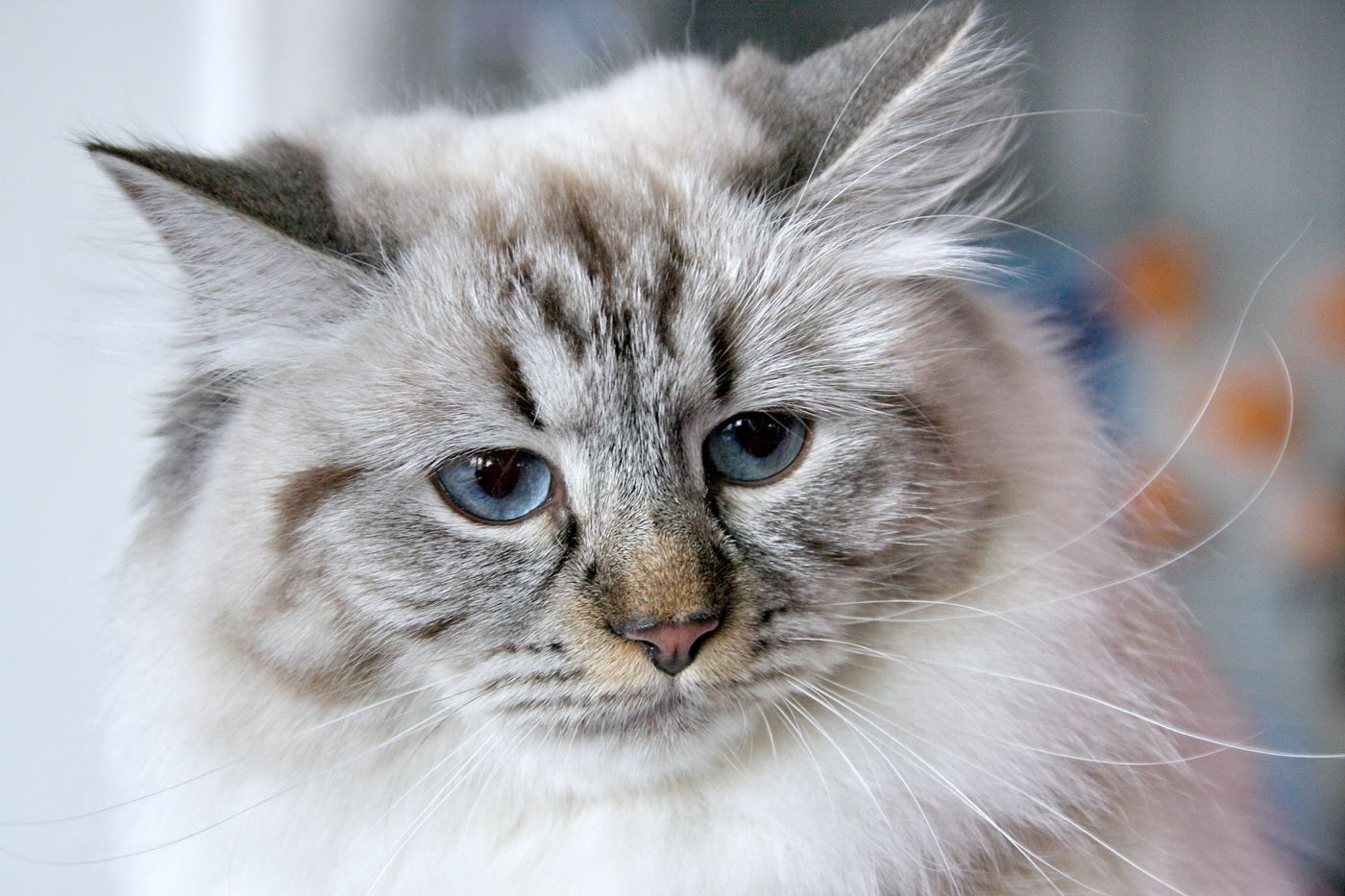
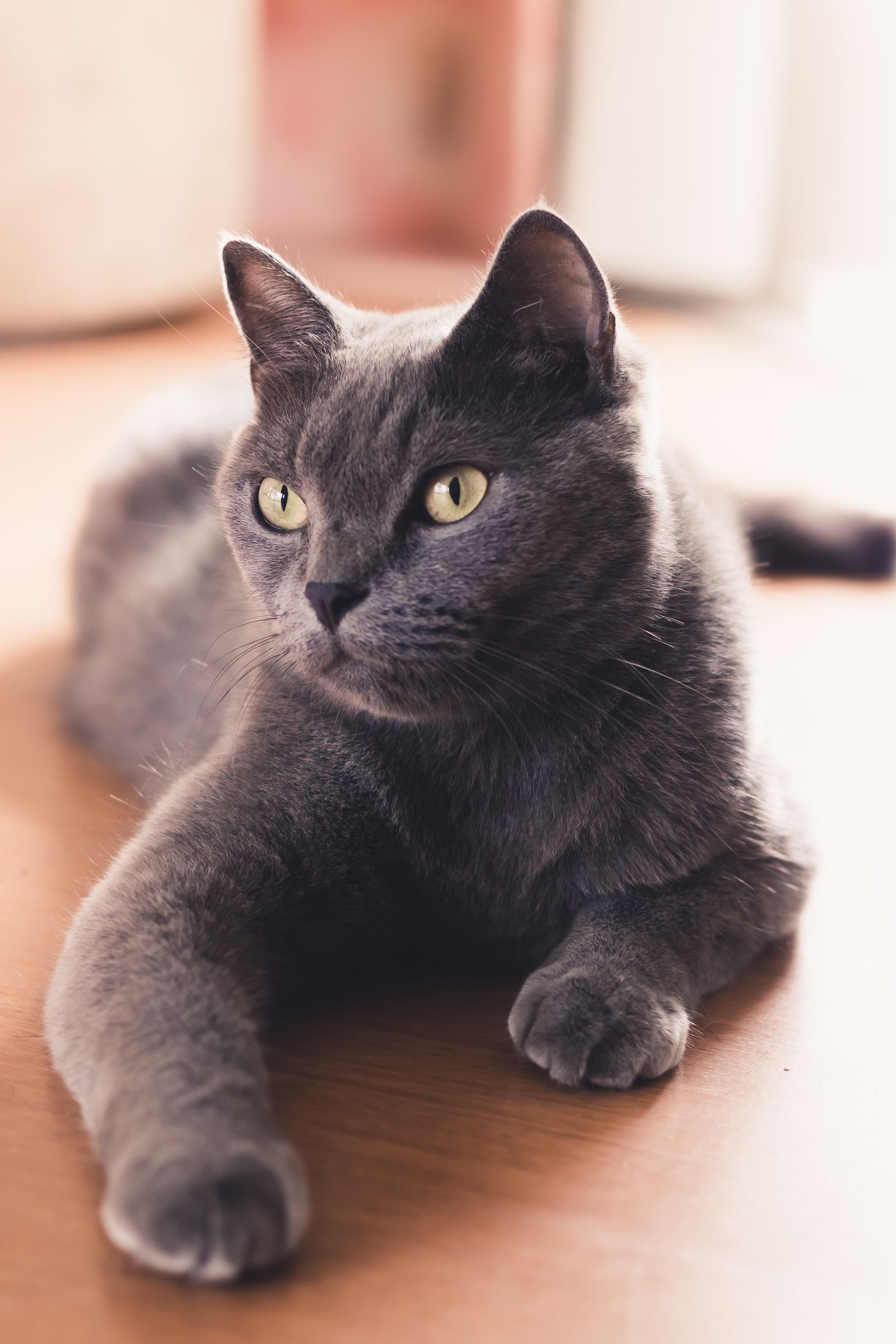
| Coat structure | Triple coat: guard hairs, awn hairs, and a dense down undercoat | Short, dense double coat: fine guard hairs standing up over a plush undercoat |
| Allergen mechanism | Fel d 1 made in saliva and sebaceous (skin) glands, spread during grooming; a genetic study found candidate gene mutations that may lower output in some individuals | Same Fel d 1 mechanism; no gene-level evidence found for lower production, but the dense coat holds shed hair and dander closer to the body |
| Evidence for the "hypoallergenic" label | Thin but real: ~50% of a breed-advocacy testing sample ran lower than typical, under 15% low enough for severe allergies | Essentially none: no peer-reviewed study found lower Fel d 1, and the breed's own fancier association disclaims the marketing |
| Shedding | Moderate to heavy, with a noticeable seasonal blowout twice a year | Light and fairly consistent year-round, no dramatic seasonal shed |
| Grooming | Combing once or twice a week, more during spring and fall shedding; can mat if neglected | A weekly brush is usually enough to keep the coat neat |
| Size | Medium to large, heavy boning; commonly 12 to 15 lbs, males often heavier | Medium, fine boning; commonly 8 to 15 lbs, about 8 to 10 in tall |
| Temperament | Playful, athletic, affectionate with the whole household, moderate to high energy | Reserved with strangers, deeply loyal and affectionate with its own people, generally quieter |
| Exercise needs | Moderate to high; enjoys climbing, jumping, and interactive play | Low to moderate; enjoys play but settles easily |
| Individual variation | Sex and neuter status matter more than breed: intact males produce more Fel d 1 than females or neutered males, in either breed | Same pattern; individual cats can vary more than 80-fold in Fel d 1 output regardless of breed |
| Average lifespan | Roughly 11 to 15 years, some reach 18 | Roughly 15 to 20 years, some live past 20 |
| Typical price | Roughly $1,200 to $4,000 from a health-testing breeder | Roughly $800 to $2,000, pedigreed lines up to about $3,000 |
Both cats cost less through a rescue than a breeder. Siberian adoption fees through a shelter or breed rescue typically run $50 to $250, well under the $1,200 to $4,000 a health-testing breeder charges, and it's worth asking Siberian-specific rescues whether a given cat's line has been Fel d 1 tested before you pay breeder prices for that claim specifically. Ongoing grooming costs differ too: a Siberian's triple coat runs roughly $30 to $100 a month in tools or occasional professional grooming, more during the spring and fall shedding season, while a Russian Blue's low-shed double coat rarely needs anything beyond a weekly brush at home.
Pick a Siberian if
- You want the breed with a real, if unproven, research signal for lower Fel d 1 output, and you're willing to ask a breeder about testing.
- You want a playful, athletic cat that stays sociable with the whole household.
- You don't mind extra brushing during spring and fall seasonal shedding.
- You're comfortable that even the best-supported claim here is "some individuals, not the whole breed."
Pick a Russian Blue if
- Low, consistent shedding and low-maintenance grooming matter more to you than a genetic allergen claim.
- You want a quieter, more reserved cat that bonds tightly with its own people.
- A longer typical lifespan is a real factor in your decision.
- You're fine knowing the "hypoallergenic" reputation here is coat mechanics and marketing, not demonstrated lower Fel d 1 production.
The honest part
Where the Russian Blue genuinely wins, and where the Siberian's edge is real but overstated
It would be easy to crown the Siberian the "more hypoallergenic" breed and stop there, since it has the closer thing to a scientific signal. We won't, because that signal is thinner than the marketing suggests, and the Russian Blue has genuine, honest advantages of its own that have nothing to do with Fel d 1 output.
- The Siberian's evidence is real but partial. A genetic survey found candidate Fel d 1 mutations more common in Siberians, and a large testing sample found roughly half ran lower than average. That is a genuine signal, not proof that any specific Siberian kitten will be low-allergen. Ask a breeder whether their specific line has been tested.
- The Russian Blue's own breed club rejects the hype. The Russian Blue Fanciers' Association states outright that it has no idea where the "hypoallergenic" reputation came from, but it did not come from Russian Blue breeders. That kind of self-correction from an advocacy group is worth taking seriously.
- Where the Russian Blue genuinely wins: less allergen actually reaching your house. Its dense double coat sheds less and holds loose hair and dander closer to the body instead of scattering it across furniture and floors, a real, mechanical reduction in household allergen load, even without any evidence the cat's body produces less Fel d 1 to begin with.
- Sex and neuter status move the needle more than breed does. In both breeds, intact males produce more Fel d 1 than females or neutered males, and individual cats can vary more than 80-fold regardless of breed. Ask about an individual cat's sex and neuter status before you ask about its breed.
Siberian vs Russian Blue, quick answers
Is a Siberian cat or a Russian Blue better for allergies?
Neither is allergy-free, and the evidence behind each breed's reputation is not equally strong. Siberians have a genuine, if unproven, genetic signal: a molecular study found candidate Fel d 1 gene mutations specific to the breed, and a large breed-advocacy testing program found roughly half of the Siberians tested produced meaningfully less Fel d 1 than a typical cat. Russian Blues have essentially no scientific backing for their hypoallergenic reputation, and the breed's own fancier association has publicly disclaimed it. What both breeds do share is a coat that traps loose hair and dander close to the body rather than scattering it. If allergies are a serious concern, meet the specific adult cat, ideally more than once, before committing either way.
Do Siberian cats really produce less Fel d 1?
Some do, but not all, and not by breed guarantee. A ~300-cat testing program run by Siberian Research Inc. found the average Siberian in their sample produced substantially less Fel d 1 than a typical house cat, and a genetic survey identified Fel d 1 gene mutations that appear more often in Siberians than in other breeds, the first evidence of a real biological mechanism. But under 15% of the Siberians tested ran low enough to be safe for someone with a severe cat allergy, and about half showed no meaningful difference from an average cat at all. Individual variation, not the Siberian label alone, decides where any one cat lands.
Are Russian Blue cats actually hypoallergenic?
No peer-reviewed study has found that Russian Blues produce less Fel d 1 than other cats, and the breed's own advocacy group, the Russian Blue Fanciers' Association, states plainly that it has no idea how the "hypoallergenic" reputation started, but it did not start with Russian Blue breeders. What is true is that a Russian Blue's dense, plush double coat holds loose hair and skin flakes close to the body instead of scattering them around a home, which can genuinely reduce how much allergen ends up on your furniture, even though it does not reduce how much Fel d 1 the cat's body actually produces.
Which sheds more, a Siberian or a Russian Blue?
A Siberian sheds more overall. Its triple coat, guard hairs, awn hairs, and a dense down undercoat, blows out its undercoat twice a year during seasonal shedding, releasing a noticeable amount of hair. A Russian Blue's short, dense double coat sheds lightly and fairly consistently year-round, without a dramatic seasonal blowout, and its density tends to hold loose hair against the body rather than dropping it around the house. Both benefit from regular brushing, but the Siberian needs it more often, especially during spring and fall.
Are Siberians or Russian Blues bigger?
Siberians run larger. The TICA standard describes a medium-to-large, powerfully built cat with heavy boning, and adults commonly weigh 12 to 15 pounds, with males often heavier. Russian Blues are a medium-sized breed with fine boning, typically weighing 8 to 15 pounds and standing 8 to 10 inches tall, visually slighter than a Siberian even though their dense coat makes them look fuller-bodied than they are.
How long do Siberians and Russian Blues live, and which has the calmer temperament?
Russian Blues tend to live longer, commonly 15 to 20 years, sometimes past 20, against a Siberian's typical 11 to 15 years (occasionally reaching 18). On temperament, Siberians are usually described as playful, athletic, and sociable with the whole household, with real energy that wants daily play. Russian Blues are more reserved with strangers but deeply affectionate and loyal to their own people, generally quieter and calmer once they're comfortable. Neither is a bad fit for a calm home; they just get there differently.